Posts

Publication: Comparing built-up area datasets to assess urban exposure to coastal hazards in Europe

As coastal hazards rise with climate change, European cities face increasing exposure to flooding. A recent CoCliCo study published in Nature compares several built-up area datasets to assess this exposure and highlights the need for precise data in urban planning.

Information on urban land use beyond the urban-rural divide can enhance assessments of coastal hazards by refining damage estimates and supporting adaptation planning. However, inconsistent definitions of “urban” in past studies have resulted in varying exposure estimates. This study examines the exposed population and built-up area across four settlement types defined by different datasets.

Key Insights:

  1. Urban Vulnerability: The study compares datasets, revealing significant discrepancies in estimating urban areas at risk from coastal flooding.
  2. Data Accuracy: Precise data helps decision-makers better plan for future flood risks and enhances climate adaptation strategies.
  3. Resilience Planning: Comprehensive urban assessments help ensure European cities’ preparedness against rising sea levels and storm intensities.

Conclusion:

Our study highlights the critical importance of selecting the appropriate built-up area data for accurate population and exposure assessments. The choice of dataset can significantly affect estimates, with variations in population exposure reaching up to 65%(127 million people). This emphasises the need for careful consideration of dataset characteristics, including spatial resolution and classification thresholds, to ensure the data’s suitability for its intended purpose. Furthermore, refined urban classifications, beyond the simple urban-rural divide, are essential for more precise risk and damage assessments. Especially in rapidly growing suburban areas. Future research should explore more nuanced urban distinctions and assess the impacts of other contributing data variables to enhance the accuracy of exposure estimates.

To read the full study for more insights on adapting urban areas to coastal hazards in Europe click here.

Authors: Hedda Bonatz, Lena Reimann & Athanasios T. Vafeidis

Adapt4Coast Webinar: Tools to enhance climate change adaptation in coastal areas

Description

Climate change severely impacts coastal areas and communities, such as social and economic damage, Property and infrastructure damage, Coastal submersion and erosion, Threats to human health and safety, and Loss of coastal wetlands and biodiversity. Coastal resilience is thus a critical environmental mitigation strategy. 

Teaming up as the Adapt4Coast Cluster, 4 EU-funded projects (SCORE, CoCliCo, PROTECT, REST-COAST) have joined forces to enhance climate resilience in European coastal areas. In this webinar, representatives of the four projects will present some of the tools and platforms under development to help communities plan smart adaptation strategies and actively tackle climate-related challenges. We will also present the Adapt4Coast joint policy brief including critical findings and valuable insights for government climate policy. 

Date & Time

Tuesday, 21 May 2024, from 10:00am to 11:30am (CEST)

Agenda

  • 10:00 – 10:05: Introduction and presentation of the Adapt4Coast cluster – Laura De Nale, Euronovia, France
  • 10:05 – 10:20: SCORE participative tools to address local needs: the EbA catalogue and the low-cost sensors catalogue – Mar Riera, ENT, Spain & Tasneem Ahmed, ATU, Ireland
  • 10:20 – 11:35: CoCliCo Coastal Climate Risk web platform – Gonéri Le Cozannet, BRGM, France
  • 10:35 – 11:50:The PROTECT sea-level projection tool – Anne Chapuis, Institut des Géosciences de l’Environnement (IGE), France
  • 10:50 – 11:05: Towards restored and better managed coastal ecosystems: REST-COAST’s solutions for preservation of large-scale ecosystems – Boris Barov, Pensoft, Bulgaria
  • 11:05 – 11:15: Adapt4Coast joint policy brief – Ananya Tiwari, ATU, Ireland
  • 11:15 – 11:30: Q&A and closing remarks

1️⃣ Mar Riera Spiegelhalder, an environmental consultant and researcher at ENT and 2️⃣ Tasneem Ahmed, PhD student at ATU Sligo Innovation Centre. They will present SCORE – Smart Control of the Climate Resilience in European Coastal Cities’s participative tools to address local needs: the Ecosystem-based approaches catalogue and the low-cost sensors catalogue.

3️⃣ Gonéri Le Cozannet, CoCliCo’s coordinator, a PhD Senior Researcher, specialist in coastal risks at BRGM, will present the CoCliCo Coastal Climate Risk web platform. CoCliCo aims to inform decision-making on coastal risk and adaptation, by delivering an open web-platform. 

4️⃣ Anne Chapuis, a PhD in glaciology on the dynamics of iceberg calving in Svalbard who has several years of experience in science communication. She is working at institut des geosciences et de lenvironnement ige, a French PROTECT partner. Anne will present PROTECT sea-level projection webtool, still under construction. It will be an open-access interactive regional and coastal sea level rise web-map service.

5️⃣ Boris Barov, an Ecologist (MSc) who worked extensively in biodiversity conservation, restoration, partnerships building and as an independent consultant at Pensoft Publishers. Boris will present different examples from REST-COAST’s nine pilot sites, which demonstrate the benefits of nature restoration as a measure for coastal restoration (e.g. river to sea connectivity and sediments transportation as tools allowing coastal areas to be more resilient to climate change).

6️⃣ Ananya Tiwari, a PhD student at ATU Sligo Innovation Centre, a SCORE – Smart Control of the Climate Resilience in European Coastal Cities partner, currently working on developing the ‘Coastal City Living Lab’ framework, ecosystem-based adaptation as well as socio-economic issues pertaining to climate adaptation. Ananya will present the Adapt4Coast joint policy brief. This policy brief presents critical findings from the Adapt4Coast Cluster. 

Video Release

The consequences of sea-level rise and coastal flooding cannot be underestimated. With 7% of Europe’s population living in highly exposed coastal areas, we need to plan now to protect lives and economies in the future. 

Authoritative data, based on the best available science, is needed now to support the decisions being made. All coastal European countries need access to accurate data and models and the ability to translate science into understandable, actionable knowledge to inform decision making:

  • Identifying priorities
  • Observing past trends
  • Exploring alternatives
  • Projecting the future

CoCliCo is a comprehensive system of coastal climate core services that is being developed to answer this pressing need. 

It is a Pan-European web-based platform that will allow access to guidance to help inform policies and investments to ensure better adaptation to the implications of coastal climate change. It forms part of a cluster of European funded projects addressing coastal adaptation, creating an “ecosystem” of climate services. 

Watch and share our new video now!

IPCC WG2 Climate Report

The IPCC WG2 Climate Report published today is the most precise and up to date global assessment of impacts, vulnerability and adaptation to climate change available at this time.  270 authors from 67 countries contributed to this assessment. 

Sea level rise represents a major threat for coastal communities, infrastructure and ecosystems during the 21st century and beyond. Thus, adaptation to sea level rise is one of the challenges addressed in this report. 

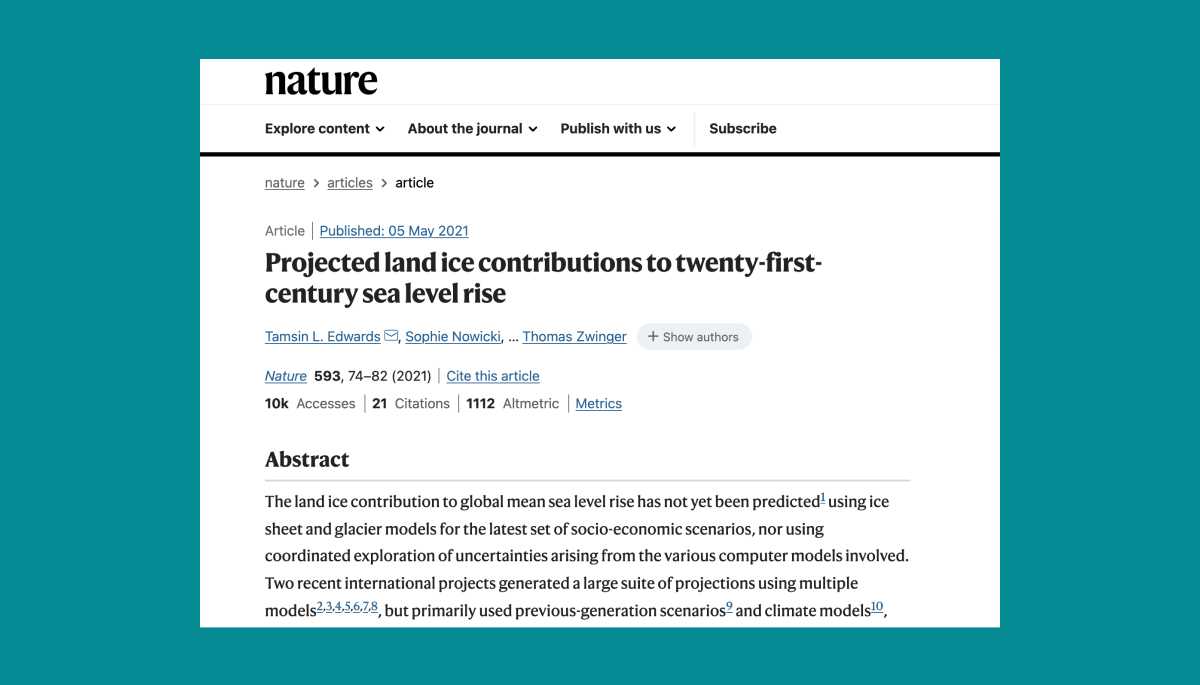
The sea-level projections delivered in July 2021 by WG1 are a major step forward. These projections are extended from 2100 to 2150 and they provide a quantitative estimate of a low-likelihood / high impact sea-level rise involving large ice mass losses in Antarctica and Greenland. Our sister project Protect Slr contributed to this assessment through new projections of ice mass losses.

Authoritative climate services will be needed to support adaptation: CoCliCo Services aims at developing a core service for coastal adaptation to sea level rise in Europe, in close cooperation with Copernicus Marine Service.

Adaptation alone will not be sufficient: urgent mitigation of climate change is needed to reduce sea level rise rates and give more time for adaptation planning and implementation, as well as to coastal ecosystems to migrate landward.